Dental emergencies
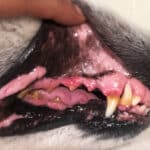
First and foremost, dental treatment includes a dental emergency. This can have many causes. For example, playing with rocks, hitting your teeth while fighting another animal, or having an accident of some other kind. Have you broken a tooth? The first priority in our practice is dental emergencies in the case of so-called tooth fractures , in which the tooth nerve is often exposed. Since this has unpleasant consequences for your pet, you must act as quickly as possible, especially for young animals under two years of age. On the other hand, there are dental emergencies in which the jawbone breaks, so-called jaw fractures , or the entire tooth breaks out of its bone anchorage (tooth dislocation).
Image: https://www.freeimages.com/photographer/bretz-40555
Professional tooth cleaning
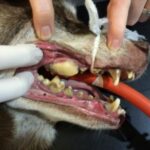
The opposite of an emergency is prevention! As veterinarians, we educate pet owners about the importance of good dental care for pets. The bacteria in dental plaque enter the body via the bloodstream, damage various organs such as the liver, kidneys or heart valves and can thus cause serious illnesses. The only reasonable method for removing plaque and tartar is careful mechanical removal from the tooth surface. In our practice, this is done by carefully removing the deposits using a special ultrasound device. Not only is the visible plaque removed, but also the part that is under the gums or in the gum pockets. A thorough polishing and sealing with fluoride completes this treatment and slows the formation of new plaque. The teeth are protected from all sides. Just like your human dentist !
Periodontology
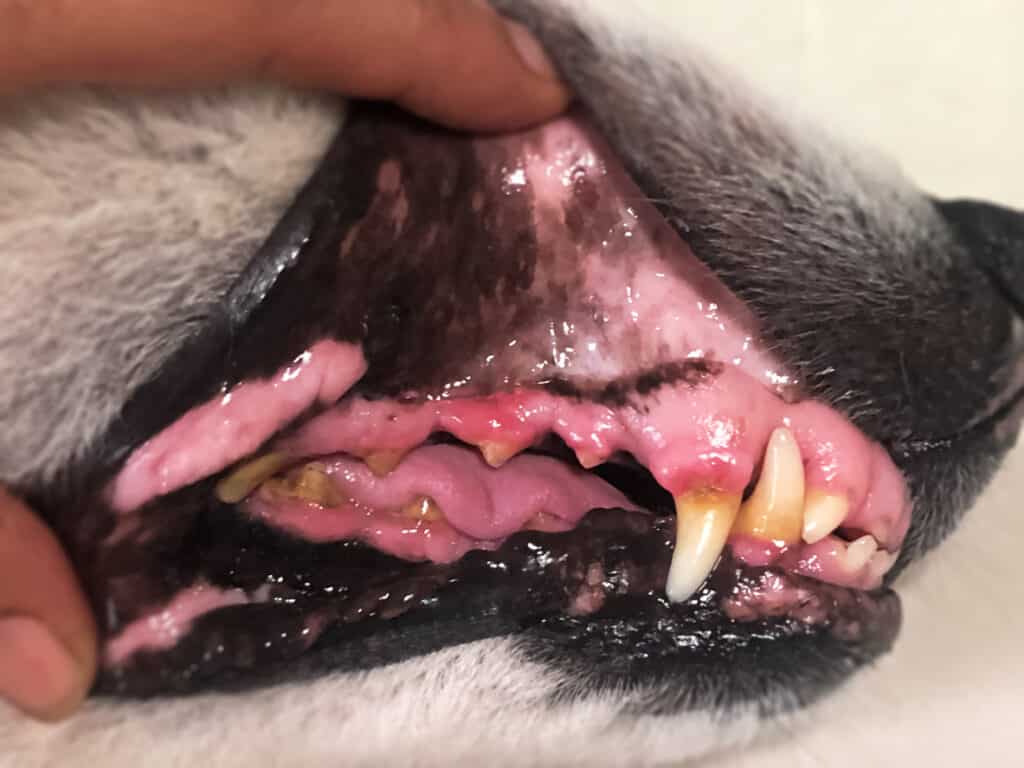
This technical term describes the theory of the dental support device. Did you know that gum inflammation is by far the most common disease in dogs and cats? More than 80% of all dogs and cats over the age of six have inflammatory diseases of the periodontium (periodontitis). This often has serious negative effects on overall health. There is no cure for this disease, but ideally it can be stopped. We'll show you what measures you can take to protect your animal's teeth.
Conservative dental treatments
Preservative dental treatments include all measures that repair damage to teeth and thus preserve teeth. These include, above all, special filling therapies. Dental fillings serve, on the one hand, to preserve the tooth as a whole and, on the other hand, to stabilize the tooth structure.
Root canal treatment
With this type of treatment, we remove the infected and dead tooth nerve and ultimately close the nerve cavity in a germ-proof manner. The advantage of this therapy is that a dead tooth can remain in the mouth and does not have to be extracted straight away. Because the same applies to your animal: the best teeth belong to you!
dentures
crowned - possibly in conjunction with special anchor systems - to achieve stability that leads to excellent results in function and aesthetics. For your pet, it's about more than just looking good, but above all about the opportunity to eat species-appropriate food.
Oral and maxillofacial surgery
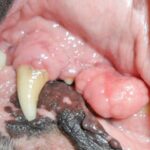
In pets, if all of the teeth do not move through smoothly, they become lodged in the jawbone. The result can be the formation of cysts or bone loss. In some cases, the neighboring teeth are also affected. We extract these teeth as part of a special oral surgical treatment. In addition, tumors, cleft palate or injuries are other aspects. Together with our team of surgeons, we will find the appropriate solution for your loved one.
Orthodontics
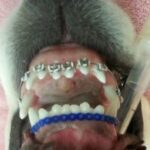
Special orthodontic measures help with individual tooth or jaw misalignments, for example due to uneven growth of the upper and lower jaw. If this is recognized in time and appropriate treatment is initiated, painful consequences, e.g. B. Bites into the mouth or palate mucosa should generally be avoided.

Special dental cases in rodents and pets
The most common cause of reluctance to eat in rabbits, guinea pigs and other pets such as chinchillas, hamsters and rats is chewing problems due to misaligned teeth and jaws. They make up by far the largest proportion in the veterinary clinic. Since nutritional errors are often the cause, we would be happy to advise you on the optimal diet. This will keep your rodent or pet’s teeth healthy for a long time.
Special dental problems in cats
Two diseases are particularly common in cats: the dissolution of the hard tooth structure ( FORL ), previously incorrectly called cervical caries, and the inflammation of the oral mucosa (chronic gingivitis/stomatitis). Gingivitis and stomatitis in particular are not easy to treat.
volume tomograph , which can show this disease even better than digital dental x-rays, is ideal for the optimal examination of FORL
anesthesia
In contrast to us humans, most dental treatments for animals are only possible under anesthesia or sedation. The majority of four-legged friends who are anesthetized every day are usually older than ten years and are therefore in the second half of their life. There are often pre-existing conditions such as heart failure, diabetes, hypothyroidism, etc., which we check with a preparatory blood test. That's why we decided on the safest form of anesthesia - based on current knowledge - so-called inhalation anesthesia / intubation anesthesia. After prior sedation, the patient is carefully intubated and connected to a ventilator. During the anesthesia phase, all important vital functions are continuously monitored using a breathing monitor, pulse oximeter, ECG and blood pressure measurement. This way, not only your animals, but you too can sleep peacefully!
Diagnostics during dental treatments
volume tomograph specially developed for animals is available to your pet in our small animal center. This allows you to take high-resolution 3D images of your dog or cat's teeth quickly and with low radiation. The resolution and display is to classic dental x-rays :