Small animal centre

Tumour diseases in pets

Tumour diseases in pets

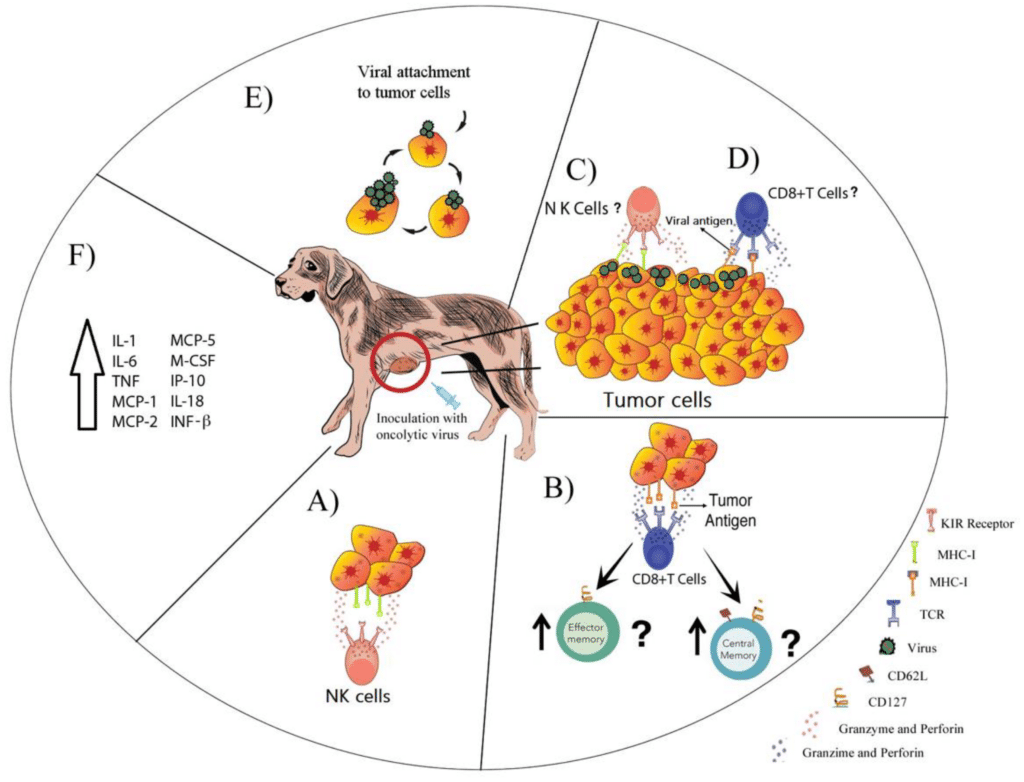
Tumors in pets are a widespread problem that causes great concern for both pet owners and veterinarians. The Arndt Small Animal Center is therefore intensively dedicated to oncology in order to provide animals with cancer the best possible care and treatment. This article presents some of the most common tumors in pets, explains their causes and symptoms, and discusses the various treatment approaches.

Tumour diseases in pets Read More »

Our catchment area – Karlsruhe Beiertheim-Bulach

Beiertheim-Bulach was formed from the two formerly independent municipalities of Beiertheim and Bulach and, with its 6,300 inhabitants, lies southwest of Karlsruhe. The Beiertheim district begins at Ebertstraße and extends to the Alb river and from state road 605 to the railway tracks. Both districts are limited in size and development potential because

Our catchment area – Karlsruhe Beiertheim-Bulach Read More »

Our catchment area – Karlsruhe South City

In the mid-19th century, the southern part of the city was developed as a workers' housing area and the first urban expansion south of the first train station on Kriegsstraße. The population rose to 15,000 within 20 years after the building ban was lifted in 1847. In 1900, as today, Werderplatz served as a central hub with shops. An above-average number of railway and postal workers lived there.

Our catchment area – Karlsruhe South City Read More »

Our catchment area – Karlsruhe Weiherfeld-Dammerstock

To the south of Karlsruhe, on both sides of the Alb River, lies Weiherfeld-Dammerstock. Weiherfeld and Dammerstock were developed in the 1920s on land characterized by meadows and fields directly behind the new main train station. The settlements are separated by the Alb and connected by three bridges. In 1960, the EWG high-rise building and a residential complex for [unclear - possibly "people"] were built.

Our catchment area – Karlsruhe Weiherfeld-Dammerstock Read More »

Our catchment area – Karlsruhe Southwest

The present-day southwest district of Karlsruhe occupies almost the entire area formerly occupied by the municipality of Beiertheim. Between 1800 and 1808, the city gradually acquired building land from the neighboring municipality to the south for a much-needed urban expansion. The district is divided into three areas: the eastern part is bordered by the main train station, the fairgrounds with its convention center, and the Karlsruhe Zoological Garden.

Our catchment area – Karlsruhe Southwest Read More »

Our catchment area – Karlsruhe Waldstadt

The idea for a new district in the northeastern Hardtwald forest arose in the 1950s and 1960s due to the rapid increase in Karlsruhe's population and the resulting demand for housing. Ground was broken in 1957, and the first residents moved in in 1958. This led to the development of what is now known as Waldstadt (Forest City). Waldstadt can be reached via Karlsruhe's light rail line 4.

Our catchment area – Karlsruhe Waldstadt Read More »

Our catchment area – Karlsruhe Northwest City

The Nordweststadt district was formed in the 1970s through the merging of various residential areas in the western part of the city and Mühlburg. Most of the housing developments were built after the Second World War, and to this day the district lacks a prominent landmark or a historical center. The Nordweststadt is a pleasant place to live. There are numerous schools and kindergartens, and with

Our catchment area – Karlsruhe Northwest City Read More »

Our catchment area – Karlsruhe North City

Karlsruhe's newest district is the Nordstadt (North City), which only came into being in 1996 from the merging of already inhabited parts of the Weststadt (West City) and a residential area of the American armed forces. The withdrawal of military units from the "American Settlement" on Erzbergerstraße was the trigger for this. Together with the slightly older Hardtwaldsiedlung (Hardtwald Settlement), these two neighborhoods form the new district. This extends north of Moltkestraße.,

Our catchment area – Karlsruhe North City Read More »

Our catchment area – Karlsruhe Neureut

The former rural municipality of Neureut, with its village-like yet modern charm, lies in the north of Karlsruhe. This district is a key hub in the northern part of the city, boasting a strong network of public and private services, and also serving the communities of the northern Hardt region. The residents of Neureut enjoy the continuous development of its infrastructure and population. Today, more than

Our catchment area – Karlsruhe Neureut Read More »

Our catchment area – Karlsruhe Knielingen

In the Loch Monastery Codex, it is mentioned as "Cnutlinga" in the year 786. Various grave finds point to settlement in the Bronze Age. Like Daxlanden, Knielingen's fortunes were strongly influenced by the Rhine. The loss of areas now located on the left bank of the Rhine resulted from Tulla's Rhine correction project beginning in 1817. In favor of the new municipal harbor, [the following sentence appears to be incomplete and requires context: "In the year [the year is incomplete and requires context]."

Our catchment area – Karlsruhe Knielingen Read More »

Our catchment area – Karlsruhe Daxlanden

A papal document from 1261 mentions the "Villa Daslar"—present-day Daxlanden. Re-establishing the village in 1651 was unavoidable after a dam breach, as its location as a customs station on the Rhine had generated substantial income since the Middle Ages. Gold was also panned in the Goldgrund area until the eighteenth century. Following the Rhine's correction by

Our catchment area – Karlsruhe Daxlanden Read More »

Scroll to Top