
- Hereditary non-inflammatory myopathy in cats: Muscular dystrophy in cats
- Overview of Muscular Dystrophy in Cats
- Diagnosis
- Life and management
- Diagram illustrating disease progression
- Which cat breeds are particularly affected?
- What innovative research is there on muscular dystrophy in cats?
- Here are five frequently asked questions (FAQs) about muscular dystrophy in cats
- Summary Muscular Dystrophy in Cats
Hereditary non-inflammatory myopathy in cats: Muscular dystrophy in cats
Overview of Muscular Dystrophy in Cats
Muscular dystrophy in cats is an inherited, progressive and non-inflammatory degenerative muscle disease caused by a deficiency of dystrophin, a muscle membrane protein. This common muscle disorder occurs primarily in newborn cats or those under one year old. Domestic cats with short fur and Devon Rex cats are particularly affected.
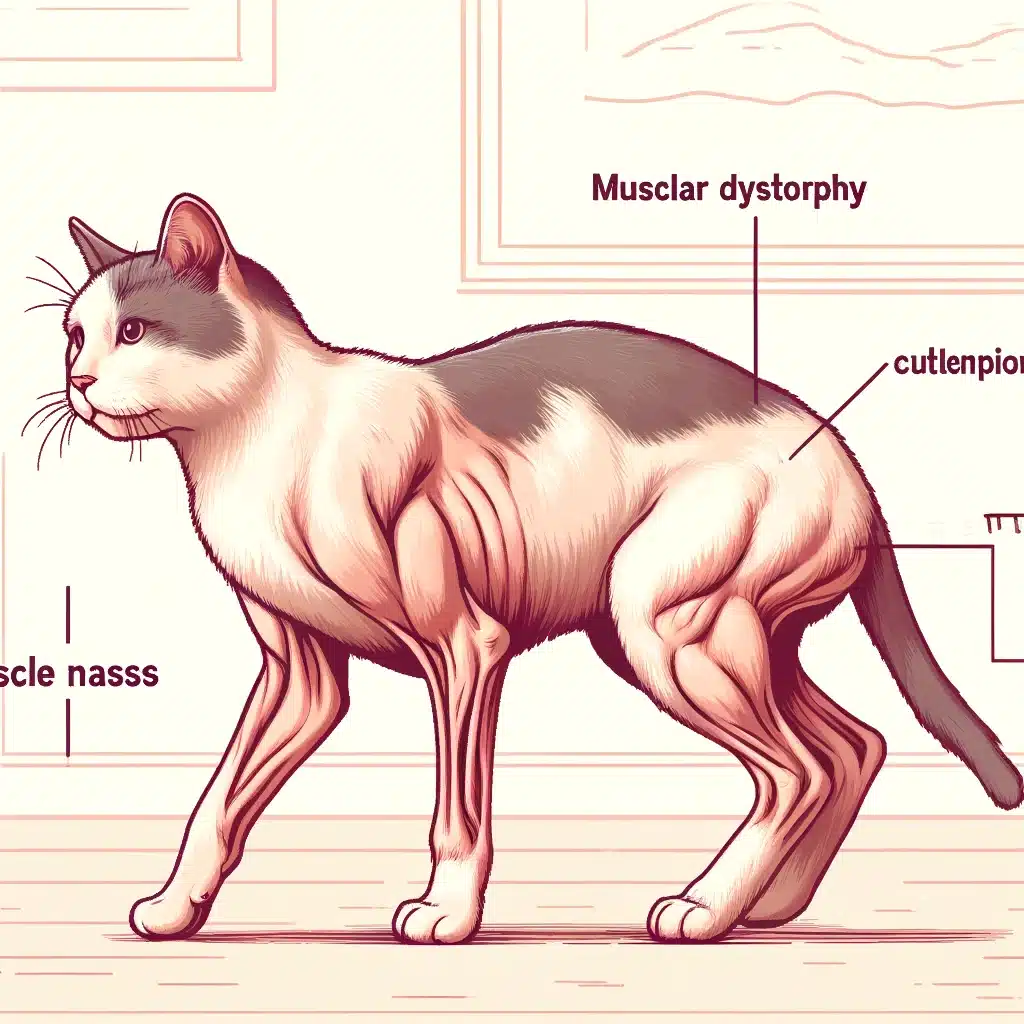
Symptoms and types
Cats with muscular dystrophy exhibit a variety of symptoms including:
- Vomit
- Increase in muscle mass
- Stiff gait
- Reluctance to move
- weakness
- Downward tilt of head and neck
These symptoms can significantly impact your cat's quality of life and require attentive care and management.
Causes of the disease
The disease is caused by a defect that leads to dystrophin deficiency. This is a genetic problem that is inherited and affects specific breeds more severely.
Diagnosis
To diagnose muscular dystrophy in your cat, a thorough history of the animal's health is necessary. Your veterinarian will perform a complete physical examination, as well as a biochemical profile, urinalysis, and complete blood count. Creatine kinase enzyme levels may be elevated due to dystrophin deficiency. Liver enzymes are also often elevated in affected cats. However, a crucial diagnostic method is muscle biopsy. A tissue sample is sent to a veterinary pathology laboratory to confirm abnormal dystrophin levels.
Treatment approaches
To date, there is no proven effective treatment for muscular dystrophy in cats. Glucocorticoids are often administered, although their effectiveness is variable and their exact mode of action in this disease is still unknown.
Life and management
Cats with this disorder are susceptible to aspiration pneumonia or heart disease and need to be checked regularly for such complications. Monitor your cat carefully and contact your veterinarian if any problems occur. Unfortunately, the overall prognosis for cats with non-inflammatory muscular dystrophy is very poor. Breeding with the affected animal is often discouraged due to the genetic nature of the disorder.
Diagram illustrating disease progression
Which cat breeds are particularly affected?
Muscular dystrophy, particularly the inherited form of non-inflammatory myopathy, is more common in certain breeds of cats. Here are two breeds that show a higher predisposition to this condition:
1. Domestic cats with short fur
This widespread cat breed shows an increased susceptibility to muscular dystrophy. Although they are genetically diverse, the spread of the disease within this group can be significant due to their large population.
2. Devon Rex
The Devon Rex, known for its curly fur and large ears, is also disproportionately affected by muscular dystrophy. This breed has specific genetic lines that may be more susceptible to the disease.
3. Maine Coons
The Maine Coon is one of the largest domestic cat breeds and is known for its robust health. However, there are isolated reports of muscular dystrophy in this breed, which may be genetic.
4. Sphynx
The hairless Sphynx may also be more susceptible to certain muscle diseases due to its genetic characteristics. Their genetic isolation and specific breeding characteristics make them a possible candidate for inherited health problems, including muscular dystrophy.
It is recommended that you monitor for signs of muscle weakness or other symptoms of muscular dystrophy in these breeds and receive regular veterinary exams to best support your cat's health.
What innovative research is there on muscular dystrophy in cats?
There are some exciting and innovative developments in research surrounding hereditary myopathies in cats, particularly muscular dystrophy. These research approaches aim to better understand the genetic causes and to develop long-term effective treatment methods. Here are some of the most promising research directions:
Genetic mapping and genome sequencing
Advances in genome sequencing are allowing researchers to identify the specific genetic mutations that cause muscular dystrophy in cats. This detailed genetic mapping not only helps identify affected animals, but also enables the development of targeted breeding programs to reduce the spread of the disease.
CRISPR-Cas9 and genetic engineering
CRISPR-Cas9 technology is revolutionizing the ability to treat genetic diseases. By specifically editing cats' DNA, scientists may be able to correct the defective genes that cause muscular dystrophy. This research is still in its early stages but shows great potential for future therapies.
Stem cell therapy
Another innovative approach is the use of stem cells to treat muscular dystrophy. The idea is to regenerate damaged muscles by introducing healthy stem cells that can transform into functional muscle cells. This technique is currently being researched and could provide a revolutionary treatment option if successfully applied to cats.
Protein replacement therapies
For certain forms of muscular dystrophy caused by a lack of specific proteins such as dystrophin, protein replacement therapies could be a viable treatment option. By directly supplying the missing protein, the symptoms of the disease could potentially be alleviated or delayed.
This research is crucial to improving the lives of cats with muscular dystrophy and offers hope for new treatments that could one day effectively combat the disease.
Here are five frequently asked questions (FAQs) about muscular dystrophy in cats
What is hereditary non-inflammatory myopathy in cats?
Hereditary non-inflammatory myopathy, often referred to as muscular dystrophy, is a genetic disorder that affects the muscle fibers of cats. It is caused by a lack of dystrophin, an important protein for the stability and function of muscle cells. This disease is progressive, meaning symptoms worsen over time. Typical signs include muscle atrophy, weakness, reluctance to move and, in severe cases, difficulty breathing or heart problems.
How is hereditary non-inflammatory myopathy diagnosed?
Diagnosis typically begins with a thorough medical history and physical examination by the veterinarian. This includes blood tests that look specifically for elevated levels of enzymes such as creatine kinase, which indicate muscle damage. However, a definitive diagnosis often requires a muscle biopsy, in which a small sample of muscle tissue is taken and examined for the presence or absence of dystrophin.
Are there treatment options for cats with this disease?
There is currently no cure for hereditary non-inflammatory myopathy in cats, but there are various management strategies to improve the quality of life of affected animals. These include physical therapy measures that can help maintain muscle strength for as long as possible and medications that can help control symptoms. Glucocorticoids are sometimes used, although their effectiveness can vary and they are not indicated for all cats.
As an owner of a cat with muscular dystrophy, how can I help?
As an owner, you can do a lot to make your cat's life pleasant and fulfilling. Regular but moderate exercise can help maintain muscle mass. An adapted diet rich in essential nutrients supports general health. It is also important that you have regular veterinary examinations in order to identify and treat possible complications at an early stage.
Can hereditary non-inflammatory myopathy be prevented?
Since this is a genetic disease, the best preventive measure is to exclude affected animals from breeding. Genetic counseling can help identify carriers of the defect, even if they show no symptoms. It is advisable for potential cat owners to ask for health certificates and genetic testing of the parents when purchasing a kitten from a breeder.
This information provides deeper insight into the understanding and management of hereditary non-inflammatory myopathy in cats and is critical to improving the quality of life of affected cats.
Summary Muscular Dystrophy in Cats
Feline muscular dystrophy is a serious genetic disorder that particularly affects young cats. Muscular dystrophy in cats is characterized by a progressive loss of muscle mass caused by a deficiency of dystrophin, an important muscle protein. Feline muscular dystrophy is commonly diagnosed in certain breeds such as Devon Rex and short-coated domestic cats. Muscular dystrophy in cats can be partially prevented through careful genetic selection of breeding animals, as it is an inherited disorder.
Diagnosis of muscular dystrophy in cats is made by various methods, including blood tests and muscle biopsies to confirm the absence of dystrophin. Muscular dystrophy in cats presents with symptoms such as weakness, stiff gait, and increased muscle mass, which may worsen over time. Muscular dystrophy in cats requires comprehensive veterinary care and monitoring to keep the affected cat's quality of life as high as possible. There is currently no cure for muscular dystrophy in cats, but there are treatments that can relieve symptoms, such as physical therapy and medication support.
Muscular dystrophy in cats is often accompanied by additional health problems, such as heart problems and breathing difficulties, which require regular monitoring. Muscular dystrophy in cats can also lead to elevated liver enzyme levels, indicating further organ stress. Muscular dystrophy in cats not only affects the cat's physical health, but can also be emotionally stressful for owners as care can be intensive.
Muscular dystrophy in cats should be detected early to ensure the best support and treatment. Muscular dystrophy in cats has a variable prognosis, depending on the severity of the disease and the cat's overall health. Muscular dystrophy in cats is a focus of research, with new treatments such as gene and stem cell therapy being investigated to potentially provide better treatment options in the future.
Muscular dystrophy in cats requires a precise and empathetic approach to veterinary care to achieve the best possible results. Muscular dystrophy in cats can present a challenge in pet care, but with the right support and resources, affected cats can live fulfilling lives. Feline muscular dystrophy remains an important area of veterinary research and practice, with the goal of improving feline welfare and health.
Additional sources: https://www.petmd.com/cat/conditions/musculoskeletal/c_ct_hereditary_noninflammatory_myopathy