Surgery

Discopathy in dogs

Discopathy in dogs

Discopathy in dogs is a serious medical condition that develops from damage to or displacement of the intervertebral discs. To better understand it, we would first like to explain the role and structure of the intervertebral discs. They consist of a cartilaginous fibrous ring, also called the annulus fibrosus, and an elastic gelatinous core, called the nucleus pulposus. The intervertebral discs ensure pain-free movement of the back and absorb shocks to the spine, for example, when jumping. They are located between the bony vertebrae in the spinal column.

Discopathy in dogs Read More »

peritoneopericardial diaphragmatic hernia

Peritoneopericardial diaphragmatic hernia in cats

We had an interesting case this week – Emma was scheduled for spaying, and during the pre-operative examination, this complication was discovered: she had a peritoneopericardial diaphragmatic hernia (PPDH). For those unfamiliar with the term, a PPDH is a rare malformation in cats where an opening exists between the abdominal and thoracic cavities. This allows organs from the abdominal cavity to protrude into the pericardial sac, potentially leading to heart problems. Most affected cats show no symptoms, while others may experience breathing difficulties or pain. Diagnosis is made through imaging techniques, and in some cases, surgical intervention is necessary.

Peritoneopericardial diaphragmatic hernia in cats Read More »

Mammary tumor in dogs

Mammary tumor in dogs

Mammary tumors in dogs are a common condition that can affect both female and male dogs. They are usually benign, but can also be malignant. In this article, we will discuss in detail the symptoms, diagnosis, treatment, and prevention of mammary tumors in dogs to provide you and your four-legged friend with the best possible care.

Mammary tumor in dogs Read More »

IPA

Isolated anconeal process IPA in dogs

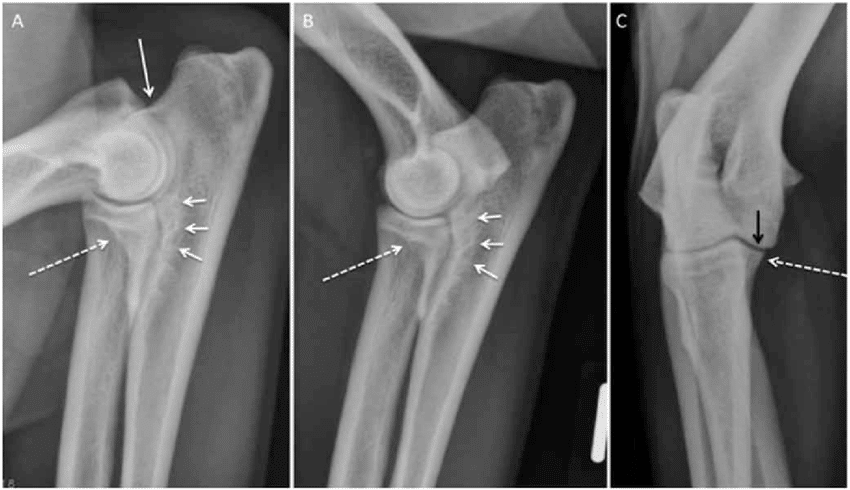
Isolated anconeal process (IPA) is an orthopedic condition that occurs primarily in certain dog breeds, such as the German Shepherd, Bernese Mountain Dog, Neapolitan Mastiff, Bloodhound, and Dogue de Bordeaux. In this condition, the anconeal process fails to fuse with the ulnar metaphysis. This article provides a detailed explanation of the pathogenesis, diagnosis, treatment, and prognosis of IPA.

Isolated anconeal process IPA in dogs Read More »

Scroll to Top